A past career as a Makeup Artist has given me more tools than brushes.
There are no failures, just lessons to take forward.
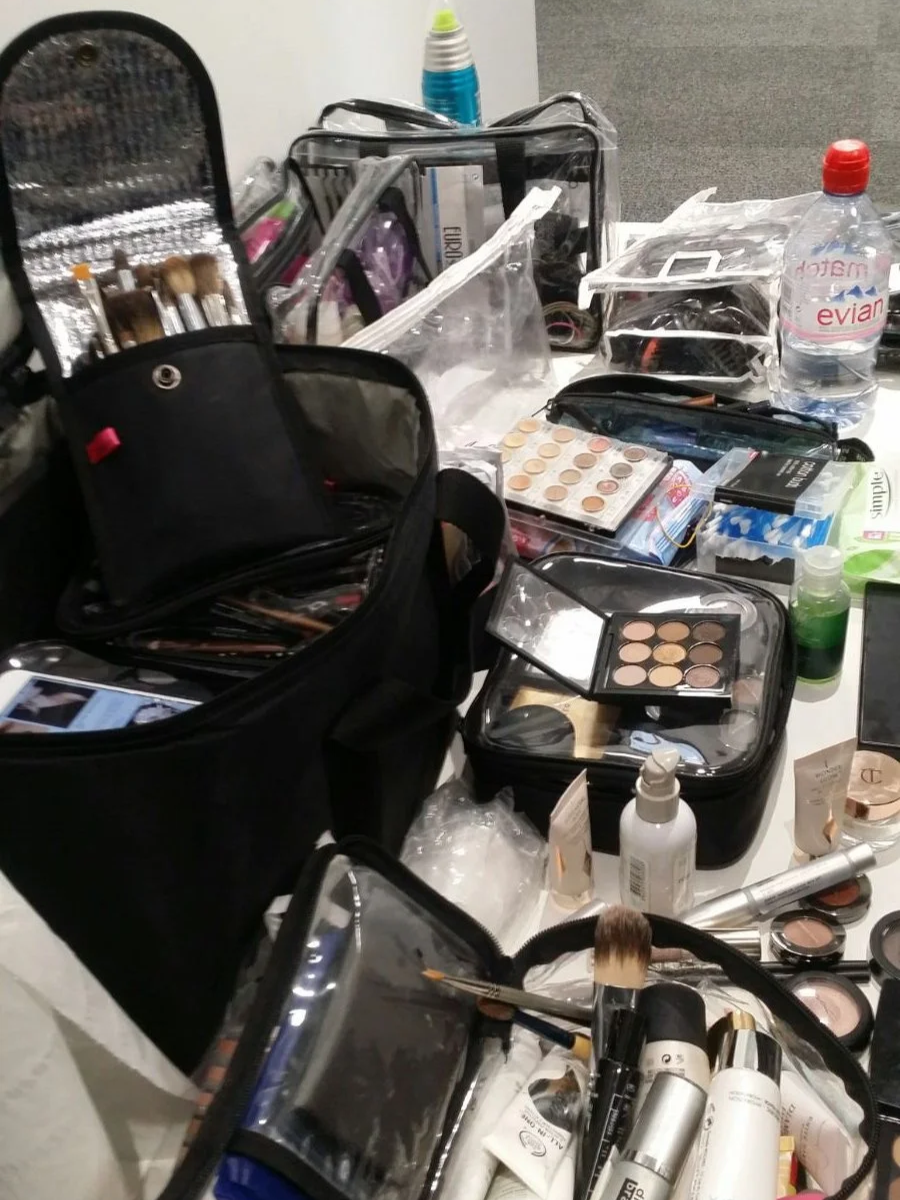
The Makeup Kit
Once upon a time, at the age of 29, you discovered a world where you worked as a Makeup Artist.
Little did I know back then that this creative career would introduce me to an industry that has taken me on an absolute roller coaster.
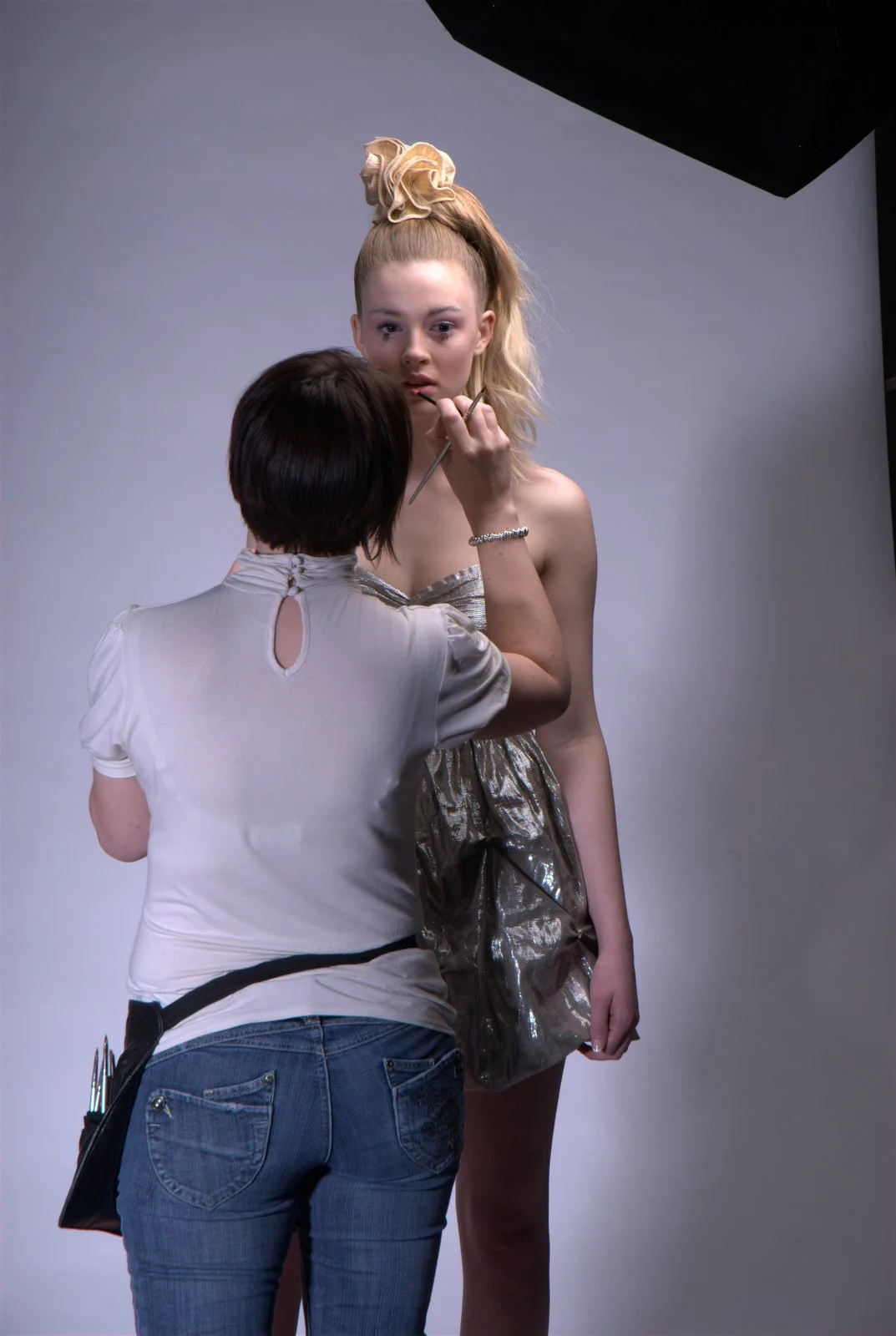
ON SET
This is me - Susan Bradfield, working as a Makeup Artist.
Long before I picked up a camera professionally, I spent years with a brush in my hand. Back then, my canvas was faces.
I trained and worked as a makeup artist on weddings, film sets, runways and fashion shoots, both in studios and on location.
It was a world of early mornings (some nights), long days, heavy kit bags, not ending with the words “That’s a wrap”. Remember what goes on - must come off. Not only were you the person who had to prep your client, putting the makeup on, but more often than not, you would need to remove the makeup, too.
I have some vivid memories at the end of a film shoot, one night, or rather early hours of the morning, cleaning makeup brushes in the kitchen with Heather White, a colleague makeup artist and now long-time best friend.
The first time I stepped foot onto a film set, I felt incredibly nervous. Understandably, as I hadn’t done that kind of work before, and we had been called in as assistant Makeup Artists (Heather and I).
I can’t begin to explain the feeling I got from stepping into that world. It is bizarre, but I felt like I belonged. There is an energy on a film set that flows through you. The crew come together busily behind the scenes, and the actors are preparing to perform their scenes in front of the camera. It is crazy, chaotic, but when they’re about the shoot, there is a particular silence that falls on set. I loved it.
I transitioned into other roles naturally - Chaperone, Accidental Actor, Talent Agent and now Photographer. As I move forward in my photography journey, I can now look back fondly on my former makeup career. It has taken a while to feel like that. I felt a failure for many years.
“There are no failures, just lessons to take forward.”
This isn’t just a footnote in my story. It’s one of the reasons I work the way I do.
I understand light, because I’ve worked with it all along.
As a makeup artist, you work closely with the light you are given, either natural light or what is provided on the set. You have to learn and adjust for the way the light falls on the face. Light can bleach, flatten or create shadows where none were visible a moment before.
I LOVE LIGHT.
When I walk into a space, a set or start a project, I am always looking for the light source. Where it falls, how it behaves, how it changes. It isn’t something that I think about consciously; it’s just something I now know. If the light is right, it is just magic. This is something I do unconsciously and daily on walks, through forests, with the dog in tow.
WORKING WITH PEOPLE IS A PRIVILEGE.
A makeup chair is an intimate place. You are working very close to people’s faces, and they need to feel comfortable and trust you.
Clients sit down as themselves, and you are, in part, responsible for how they feel when they stand back up. You learn to read nerves, to hold a conversation that settles someone, to notice when someone needs quiet and when they need drawing out.
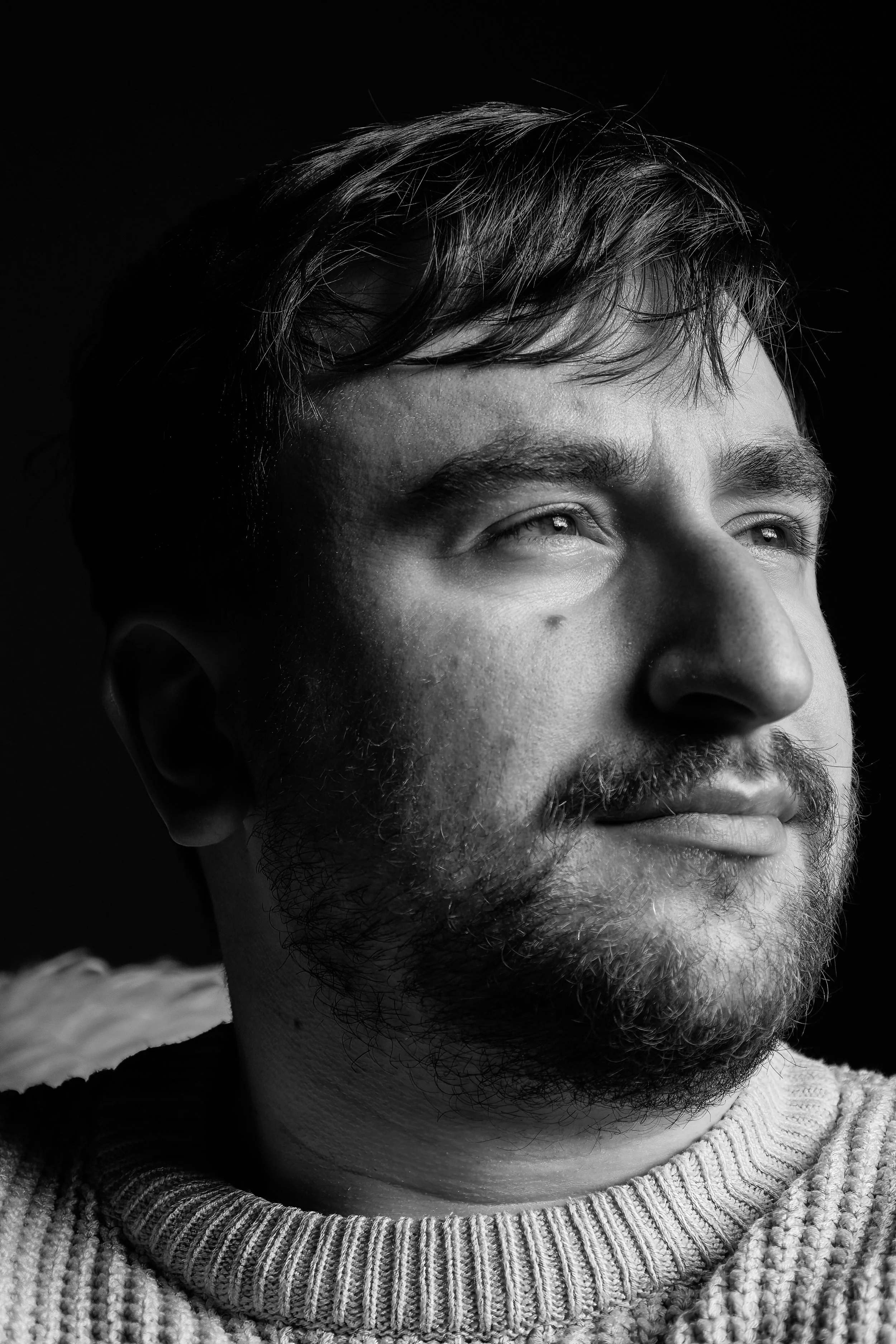
Portraits
Having technical skill won’t get you a true photograph of someone who doesn’t trust you.
Helping people feel comfortable, seen, and unhurried in front of the camera is something I’ve been practising for a long time. Long before I even started photography.
What it all comes down to.
My time as a makeup artist gave me something that can’t be taught. A deep understanding of people, of light, of the gap between what we see and what the camera records.
And it has taught me that there are no failures, just lessons.
Thank you for reading.
Susan x